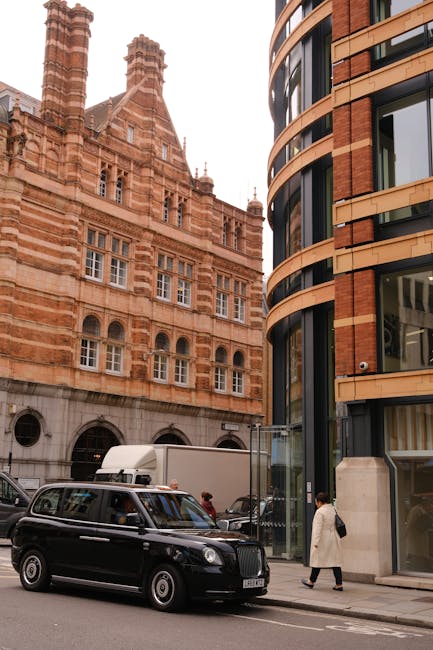
Fleet Street access guide for London removals: how to plan a smoother move in a busy London corridor
Fleet Street looks straightforward on a map. In real life, though, it can feel like a tight, moving target: narrow windows for loading, traffic that changes by the minute, delivery vans competing for space, and the usual London mix of pedestrians, cyclists, buses, and impatient taxis. If you are planning a move in this part of the city, a proper Fleet Street access guide for London removals is not just helpful. It is the difference between a calm moving day and one that turns into a queue of small headaches.
This guide explains how access works, what usually causes delays, and how to prepare so your removal team can load and unload efficiently. Whether you are moving a flat, an office, a few bulky pieces, or a full household, the aim is simple: reduce friction, protect your belongings, and make the route, the timing, and the parking all work together.
To be fair, most moving problems on Fleet Street are not dramatic. They are practical. A forgotten loading restriction, a lift that is smaller than expected, a staircase with a stubborn turn, or a van that ends up parked three streets away. Small things, yes. But they stack up quickly.
Table of Contents
- Why Fleet Street access matters for London removals
- How Fleet Street access works on moving day
- Key benefits and practical advantages
- Who this guide is for
- Step-by-step access planning
- Expert tips for better results
- Common mistakes to avoid
- Tools, resources and recommendations
- Law, compliance and best practice
- Access options compared
- Real-world example
- Practical checklist
- Conclusion
- Frequently asked questions
Why Fleet Street access matters for London removals
Fleet Street sits in one of those classic central London settings where road layout, footfall, and timing matter more than people expect. Even a well-organised move can slow down if the van cannot get close enough, if the building has strict loading rules, or if access is shared with other properties. For removals, every extra metre between the van and the front door usually means extra time, extra handling, and more chance of something getting knocked.
The issue is not just convenience. Access affects:
- how long loading and unloading will take;
- whether bulky furniture can be moved safely;
- if parking is possible near the property;
- whether the route works for larger removal vans or only smaller vehicles;
- how much disruption there is to neighbours, pedestrians, or building users.
In central London, access is often the hidden part of the job. People focus on boxes and addresses, which is understandable, but the route from vehicle to property can make or break the day. A good access plan turns a stressful stretch of road into a manageable sequence of tasks. That is the whole point.
If you are still at the stage of weighing up service types, the broader removal services overview can help you decide what level of support fits your move, while the practical guidance in man with a van services in Temple is useful if your move is smaller or time-sensitive.
How Fleet Street access works on moving day
Access planning is basically a chain of decisions. First you identify where the vehicle can stop. Then you check how close that stop is to the entrance. After that, you work out whether there are stairs, lifts, width restrictions, or security controls inside the building. Sounds simple. But each step can change the whole moving schedule.
On Fleet Street and the surrounding central London streets, a removals team will usually consider the following:
1. Vehicle size and stopping point
A full-size removal van is excellent for efficiency, but it is not always the best fit for tight access. In some situations, a removal van in Temple or a smaller vehicle may make the job faster overall because it can get nearer the entrance. The best option depends on street width, road furniture, traffic, and any stopping restrictions.
2. Loading bay or kerbside access
Some buildings have designated loading bays. Others rely on short kerbside stops, which can be awkward if the street is busy. If a loading bay exists, confirm whether it needs pre-booking, whether time limits apply, and whether height limits affect the vehicle you choose. Those details matter more than they sound like they should.
3. Building entry and internal route
Once inside the building, the real puzzle begins. Is there a lift? Is it large enough for sofas or wardrobes? Are there security doors, keypad codes, concierge checks, or one-way corridors? On older central London buildings, a narrow staircase or tight landing can add significant time. If you are moving a flat, the flat removals service in Temple is often the most relevant starting point because it is designed around these access realities.
4. Timing and traffic flow
Fleet Street is not a place to assume the road will be kind to you. Early morning may be calmer, but not always. Midday can be the opposite of calm. Afternoon traffic, school runs, deliveries, and general London churn can all get in the way. The best removals plans leave breathing room. Rushed schedules tend to collapse on the first delay.
In our experience, the best moves here are the boring ones. Clear information, modest assumptions, and a route that has already been thought through. Not glamorous, but effective.
Key benefits and practical advantages
Good access planning is not just about avoiding problems. It brings real benefits that show up in the quality of the move itself.
- Less handling time: The closer the van, the fewer journeys with boxes and furniture.
- Lower risk of damage: Shorter carry distances usually mean fewer bumps, twists, and rushed turns.
- Better protection for the building: Careful access planning helps reduce marks on walls, lifts, and communal areas.
- More accurate scheduling: When the access route is clear, arrival times and completion estimates are more realistic.
- Less stress for everyone: You are not trying to solve parking, keys, and box labelling all at once.
There is also a financial angle, although it should be treated carefully. Better access can help avoid unnecessary labour time, repeat trips, or extra waiting. That does not mean every move becomes cheaper overnight, but it does mean the work is usually smoother and easier to plan.
For larger or delicate furniture, access planning becomes even more valuable. If you have awkward items, reading furniture removals in Temple can give you a better sense of how specialist handling fits into the move. And if you are deciding whether to keep items in storage for a while, the guide on storage options in Temple is worth a look.
Who this guide is for and when it makes sense
This guide is useful for a surprisingly broad range of people. If you are moving anywhere near Fleet Street, the access questions are relevant even if your move is tiny. The scale changes, but the access logic stays the same.
You will especially benefit from this if you are:
- moving from a flat in a converted building;
- relocating an office or small business;
- moving during working hours and need to avoid disruption;
- dealing with a basement, upper-floor flat, or lift access;
- moving furniture that is heavy, fragile, or awkward to turn;
- working to a tight deadline, for example on the same day;
- unsure whether a man and van service is enough or you need a larger team.
If you are a student or moving into smaller accommodation, the student removals page for Temple can be helpful too, because students often have the same access headaches but with a smaller budget and less flexibility. Different move, same narrow stairwell. It happens.
Truth be told, access planning matters most when the move seems "simple". That is usually when people relax too early and forget to check the basics.
Step-by-step guidance
Below is a practical sequence you can use to plan a Fleet Street removal without overcomplicating it.
Step 1: Walk the route in your head before moving day
Start with the outside. Where can a van stop? Where will people walk? Is there enough room for doors to open fully? If possible, look at the building entrance in person rather than relying only on photos. A doorway can look generous on a screen and feel tight in real life.
Step 2: Measure the items that matter
You do not need to measure every mug. Focus on large items: sofas, beds, wardrobes, desks, dining tables, and appliances. Add the dimensions of any awkward item that needs tilting or turning. If you are moving a bed, this article on bed and mattress transport is genuinely useful for understanding the practical side of dismantling and carrying larger bedroom pieces.
Step 3: Check building access details
Ask about lifts, stair access, porters, access codes, booking slots, and any rules about moving through communal areas. Office moves in particular can involve reception protocols or building management rules, which is why the office removals service in Temple can be a better fit than a generic moving approach.
Step 4: Choose the right vehicle and crew size
A smaller van may be the smarter choice if the street is constrained. A larger van may still be worth it if the move is substantial and the access is workable. It is a balancing act, not a one-size-fits-all answer. If you are unsure, speak to a team that deals with central London regularly. A quick access discussion can save a lot of guesswork later.
Step 5: Plan the loading sequence
Put the heaviest and least flexible items first, unless the access route suggests otherwise. Keep fragile items separate and clearly labelled. If you have a lot of boxes, the practical packing advice in these packing tips can help you avoid the usual last-minute scramble.
Step 6: Allow time for real-world delays
Street access in central London is rarely exact. A delivery van may block the kerb. A lift may be occupied. Someone may be unloading in the same bay. Leave margin in the plan. You will thank yourself later, probably around 11:40 when the first unexpected delay shows up.
Step 7: Build in a backup plan
Decide in advance what happens if the van cannot park directly outside. Is there an alternative stop? Can a smaller vehicle help with the final stretch? Can the team do a shuttle run? A backup plan does not mean you expect failure. It means you have read the street properly.
Expert tips for better results
Small choices make a big difference on Fleet Street. These are the details that experienced movers pay attention to.
- Book the right time window: If you have any flexibility, choose a slot that avoids peak congestion and building rush hours.
- Keep critical items separate: Documents, keys, chargers, medication, and essentials should travel with you, not in the back of the van.
- Protect corners and edges: Tight buildings are where sofa arms, table legs, and door frames tend to meet in a less-than-friendly way.
- Use clear labels: Labels that say "kitchen", "office", or "fragile" are far easier to work with than mystery boxes.
- Confirm access with building management early: A five-minute call can prevent a twenty-minute delay. Sometimes less, sometimes more.
If you have large sofas or soft furnishings, a little extra planning helps preserve their condition. For example, the article on how to store a sofa properly is useful if part of your move involves temporary storage. Likewise, if appliances are staying off for a while, the guidance on protecting a freezer during downtime can stop avoidable damage.
One simple tip that often gets overlooked: take a quick video of the access route before moving day if you can. Not for drama. Just for clarity. Doors, lifts, turns, and parking signs are easier to explain when you can show them.
Common mistakes to avoid
Most access problems are predictable in hindsight. That is the annoying part. Here are the ones worth avoiding from the start.
- Assuming a van can stop outside: In central London, that assumption is often wrong.
- Forgetting about width and turning space: The street may technically allow access, but the actual turning room may be poor.
- Ignoring building rules: Some properties restrict moving hours, lift use, or loading procedures.
- Underestimating carry distances: A short walk becomes a long one when you are carrying a mattress down stairs.
- Not measuring large items: This is where problems with beds, wardrobes, and pianos tend to start.
- Leaving packing too late: Last-minute boxes slow everything down and make access issues feel much worse.
One of the more common oversights is failing to think about item weight in relation to the route. If you are tempted to "just move it yourself", read these practical tips for lifting heavy items alone and then think carefully. Sometimes the bravest option is to get help.
If you are moving a piano, this becomes even more important. The comparison in DIY versus professional piano moving lays out the judgement calls in a clear, sensible way. Pianos and Fleet Street access are not a natural friendship.
Tools, resources and recommendations
You do not need specialist kit for every move, but a few tools and services can make access management much easier.
| Tool or resource | What it helps with | Best used for |
|---|---|---|
| Measuring tape | Checking item dimensions, door widths, stair clearances | Large furniture and tight access points |
| Floor plan or building notes | Identifying lifts, stairs, entrances, and routes | Flats, offices, managed buildings |
| Parking or loading information | Reducing the chance of last-minute parking confusion | Kerbside stops and busy streets |
| Strong boxes and packing materials | Protecting belongings during short or long carries | General household or office removals |
| Professional removal support | Managing access, lifting, loading, and route decisions | Central London moves with tight constraints |
For packing supplies, the packing and boxes page is a sensible resource. If your move is especially time-sensitive, you may also want to look at same-day removals in Temple. That service is not ideal for every scenario, but when timing is tight, it can be the difference between chaos and calm.
If you are keen to reduce clutter before the move, the article on decluttering before a move is one of the most practical starting points. Less stuff really does make access easier. Obvious, yes, but worth saying.
Law, compliance and best practice
For removals near Fleet Street, compliance usually means paying attention to local parking restrictions, building access rules, traffic conditions, and health and safety expectations. The exact requirements can vary by street, by building, and by time of day, so it is wise not to assume one standard answer applies everywhere.
Some best-practice areas to keep in mind:
- Parking and loading: check whether stopping is permitted and whether time limits apply;
- Building consent: some properties need advance notice for moves;
- Safety: protect walkways, avoid blocking emergency routes, and use suitable lifting methods;
- Insurance: confirm that items and handling arrangements are covered appropriately;
- Waste and recycling: dispose of unwanted items responsibly rather than leaving them behind.
It also helps to work with a provider that takes procedures seriously. If you want reassurance on that front, take a look at the pages covering health and safety, insurance and safety, and recycling and sustainability. They are not exciting reads, admittedly, but they do tell you a lot about how seriously a company handles the practical side of moving.
For service terms, it is also sensible to review terms and conditions and the pricing and quotes page before booking. Clear expectations prevent awkward surprises later on. Always better that way.
Options, methods, or comparison table
Not every Fleet Street move needs the same approach. The right method depends on volume, access, timing, and how much handling the items can tolerate.
| Method | Best for | Strengths | Possible drawbacks |
|---|---|---|---|
| Small van / man and van | Light to medium moves, awkward street access | Flexible, easier to manoeuvre, often faster for tight routes | May require multiple trips if the load is large |
| Full removal van | Larger household or office moves | More capacity, fewer trips, efficient for bigger jobs | Can be harder to park or position on constrained streets |
| Combined packing and removal support | Busy clients, fragile items, short timelines | Saves time, improves organisation, reduces packing stress | Needs earlier booking and clearer planning |
| Partial self-move | Small loads with flexible timing | Lower immediate cost, more control | More physical effort, more risk if access is awkward |
For many Fleet Street removals, the winning setup is not the biggest vehicle. It is the most suitable one. That sounds a bit obvious, but it is the part people miss when they are trying to save time by choosing the first available option.
Case study or real-world example
Imagine a small office move just off Fleet Street. The team has desks, boxed files, a meeting chair set, and two heavier storage units. The building allows loading only in a narrow time window, and the street is already active with deliveries by mid-morning.
Instead of turning up with a large van and hoping for the best, the move is planned around access first. The team checks the entry route, confirms the lift size, and measures the largest unit before moving day. They also decide to split the load into two categories: items that can go through the lift and items that need to be carried carefully down the stairs.
On the day, the van parks at the nearest workable point rather than circling for a perfect space that probably does not exist. The boxes are moved in labelled groups, the heavier items are padded properly, and the route is kept clear for staff and pedestrians. Nothing dramatic happens. Which, honestly, is exactly the point.
Would the move have been impossible without this planning? No. But it would almost certainly have taken longer, felt more stressful, and increased the chance of damage or building friction. That is what good access planning really buys you.
Practical checklist
Use this checklist the day before and again on the morning of the move. It is simple, but it works.
- Confirm the exact pickup and delivery addresses.
- Check the best stopping point for the vehicle.
- Ask about loading restrictions or booking requirements.
- Measure the largest furniture and appliances.
- Confirm lift size, stair access, and any access codes.
- Pack fragile items separately and label clearly.
- Keep essential documents and valuables with you.
- Protect floors, corners, and narrow door frames where needed.
- Allow extra time for central London traffic.
- Have a backup plan if the van cannot park directly outside.
If you are clearing out a property before handing back the keys, the guide on deep cleaning before moving out can help you avoid that frantic final-hour feeling. And if you need to store items temporarily while access or timing gets sorted, a sensible backup is always local storage in Temple.
Quick expert summary: Fleet Street removals are easier when you plan access before you plan the van. Check parking, measure large items, confirm building rules, and leave some buffer in the schedule. That small bit of preparation saves a surprising amount of stress.
Conclusion
A Fleet Street move does not need to become a battlefield of vans, boxes, and blocked kerbs. With the right access plan, it can be orderly, efficient, and much less tiring than people expect. The key is to treat access as part of the move itself, not as a detail to sort out later.
If you are weighing up your next step, focus on three things: the street, the building, and the items. Get those right and the rest becomes far easier. And if one of those three feels uncertain, that is usually the moment to ask for help rather than pushing ahead and hoping it will all work out. Hope is not a loading plan, after all.
Get a free quote today and see how much you can save.
A well-planned move has a quiet kind of relief to it. The van arrives, the route works, the boxes keep moving, and by the end the street is just a street again.
Frequently Asked Questions
What is a Fleet Street access guide for London removals?
It is a practical guide for planning how a removal vehicle, team, and belongings can safely reach and leave a property near Fleet Street. It covers parking, loading, building entry, timing, and access constraints so the move runs more smoothly.
Why is access such a big issue in central London moves?
Central London streets often have tight parking, active traffic, shared loading areas, and building restrictions. Even a short carry from van to door can take longer than expected, so access has a direct impact on speed and safety.
Should I choose a small van or a larger removal van for Fleet Street?
It depends on the street, the building access, and the size of the load. A smaller van can be more practical if parking is tight, while a larger van may be better for bigger moves if there is a workable stopping point.
Do I need to tell the building manager before moving day?
Usually, yes. Many buildings expect notice for removals, especially where lift use, security access, or communal areas are involved. It is sensible to confirm this early rather than assuming access will be straightforward.
What items cause the most access problems?
Large sofas, beds, wardrobes, desks, pianos, and appliances are the usual troublemakers. They are harder to turn, lift, and carry through narrow routes, so they need proper measuring and handling.
How can I reduce delays on a Fleet Street move?
Measure large items, confirm parking and loading details, pack early, label boxes clearly, and leave time for traffic. The biggest delays usually come from not checking access details in advance.
Is same-day removal realistic in this part of London?
Sometimes, yes, especially for smaller moves or urgent situations. But the feasibility depends on access, timing, and vehicle availability. A service like same-day removals in Temple can be useful when the move is simple enough to handle quickly.
What should I do if the van cannot park outside the property?
Have a backup stop nearby, check whether a smaller vehicle would help, and plan for a longer carry if needed. A good removals team will adjust the loading sequence so the process still stays efficient.
Do I need specialist help for office removals near Fleet Street?
Often, yes. Office moves bring extra considerations such as working hours, building rules, filing systems, and furniture that needs careful handling. The dedicated office removals service is more suitable than a generic one-size-fits-all approach.
How far in advance should I plan access for a Fleet Street removal?
As early as possible. Even a short lead time helps you confirm parking, building access, item sizes, and the right vehicle. If your move is larger or time-sensitive, a few days of planning can make a noticeable difference.
Can storage help if my Fleet Street access is complicated?
Yes. Temporary storage can be a smart option if move-in and move-out timings do not line up or if access at one end is too awkward on the day. It gives you breathing room and can reduce pressure on the main removal schedule.
What is the most common mistake people make with central London removals?
The most common mistake is assuming access will sort itself out on the day. In reality, parking, building entry, and item size all need checking beforehand. A little planning goes a long way, and it saves a lot of scrabbling about later.
Where can I find more support for preparing a move?
You can look at practical guides on decluttering, packing, lifting, and storage, along with service pages that explain what kind of moving support is available. A thoughtful move is usually the one with a few good decisions made early.