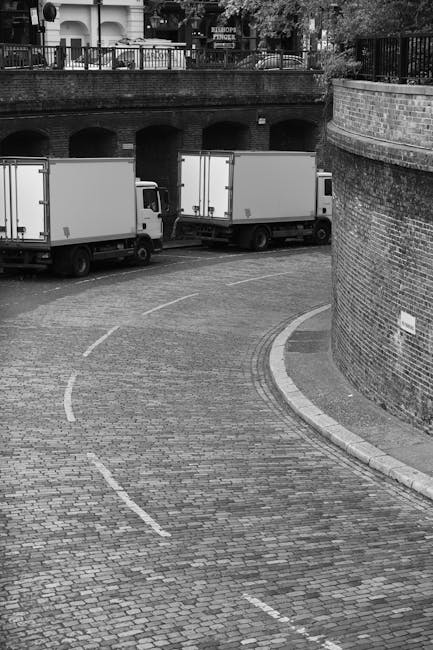
Fleet Street to Inner Temple van removals best access tips

If you are planning a move from Fleet Street to Inner Temple, the awkward bits are usually not the boxes. They are the access points: narrow lanes, one-way stretches, timed restrictions, loading space that disappears when you need it most, and the small matter of getting a van in without making the whole street feel like a bottleneck. The good news is that Fleet Street to Inner Temple van removals best access tips are very practical once you know what to look for. In this guide, we will walk through the route logic, the common pinch points, the best loading approach, and the little details that save time, money, and stress. It is a proper London move, in other words. A bit fiddly, but absolutely manageable.
Why Fleet Street to Inner Temple van removals best access tips Matters
Fleet Street and Inner Temple sit in one of the most access-sensitive pockets of central London. That alone changes how a van removal should be planned. On paper, the distance is short. In practice, the move can be slowed down by road layout, traffic flow, servicing activity, parking controls, pedestrians, and the kind of stop-start movement that makes a driver think, "Right, where exactly can I pull in here?"
Access matters because the smallest delay has a knock-on effect. A van that cannot stop safely close to the entrance may need repeated shuttling. A building with stairs or tight thresholds may need extra handling time. If you get the approach wrong, you can end up paying for waiting time, extra labour, or a second trip you never wanted in the first place. And nobody wants to stand on a pavement at 8:15 in the morning while a wardrobe slowly negotiates a corner. Let's face it, that is not the glamour side of moving.
The best access tips are not about being clever for the sake of it. They are about reducing friction. Shorter carry distances. Fewer double-parks. Clearer timing. Safer lifts. Better communication with the driver and building contact. That is what turns a stressful city move into a controlled one.
There is also a trust element here. A good removal plan shows that the mover understands the area, not just the job. That matters for homes, chambers, offices, and any move where precision counts.
How Fleet Street to Inner Temple van removals best access tips Works
The idea is simple: plan the route, assess the loading point, confirm the building access, then match the van size and crew to the real conditions on the ground. The challenge is that each of those steps has its own moving parts. A route that looks fine on a map may not be ideal once you factor in timed restrictions, busy pedestrian flows, or a narrow entry into a courtyard or side street.
A good access plan usually starts with three questions:
- Where will the van stop safely and legally?
- How far is the carry from van to door, lift, or stairwell?
- What could slow the move down at the exact time you arrive?
That third question is often the one people skip. It might be a planned road restriction, a busy lunch period, a building concierge sign-in, or a loading bay already occupied by another vehicle. Around Fleet Street and Inner Temple, timing can matter just as much as distance. Early mornings are often calmer. Midday can be much less forgiving. You will notice the difference immediately, especially if you are trying to move bulky furniture while people are moving around with coffee cups and mobile phones.
In practical terms, the process works best when access is treated as part of the removal itself, not a separate admin task. The van, the route, the crew, the lifts, and the building rules all need to line up. If one part slips, the whole move can drag.
For many local moves, a service such as man and van removals can be a good fit when access is tight and the load is modest. For larger or more complex moves, a broader removal services approach may be the safer choice because it gives more flexibility with manpower and vehicle setup.
Key Benefits and Practical Advantages
When access is planned properly, the benefits are very real. Not vague marketing benefits. Actual practical ones.
- Less waiting time: The crew can start unloading sooner if the stop point is clear and legal.
- Lower handling risk: Shorter carry distances mean fewer chances of scuffs, knocks, or strained lifting.
- Better timing: A well-timed slot helps avoid the worst traffic and the busiest pedestrian periods.
- Cleaner communication: Everyone knows where the van is going, where it can pause, and what to do if access changes.
- Smaller stress spike: Honestly, that matters more than people admit. A move feels much easier when the access plan is already sorted.
There is also a financial angle. Poor access can create avoidable costs: extra labour time, parking complications, extra van movements, or even a failed attempt if the vehicle cannot stop where expected. Good access planning helps protect the budget without cutting corners on safety.
For local moves where the job needs a straightforward load-and-go setup, a vehicle such as a moving van may be enough. If the move includes heavier furniture or office equipment, then a larger removal van or even a broader relocation setup may be more appropriate.
Who This Is For and When It Makes Sense
This kind of access planning is most useful for people moving within central London where kerbside space is limited and buildings are close together. That includes:
- tenants moving flats or studios around Fleet Street and Temple
- law firms, chambers, or professional offices shifting equipment between addresses
- landlords clearing a property between occupiers
- homeowners or leaseholders moving furniture and boxes into a tighter access area
- anyone with large items that are awkward to carry through narrow entrances
It makes sense whenever there is a likely mismatch between what a move looks like on a screen and what it looks like in the street. That happens all the time in this part of London. A place may seem "just down the road," but if the loading point is awkward and the building has stairs, you are suddenly dealing with a very different kind of job.
It is especially relevant if the move is time-sensitive. Maybe you are handing keys back the same day, or you need to clear chambers before the next occupier comes in. In those cases, smooth access is not a nice extra. It is the difference between a tidy handover and a rushed scramble.
Step-by-Step Guidance
If you want the move to run cleanly, it helps to break the job into a few simple stages. Nothing fancy. Just clear decisions in the right order.
1. Map the actual access point, not just the postcode
Start by identifying the exact entrance the van needs to reach. Is it on Fleet Street itself, a side road, a service entrance, or a courtyard access point? A postcode is useful, but it is not enough. The difference between "near the building" and "at the correct loading side" can add 10 or 15 minutes straight away.
2. Check loading conditions and timing
Look at when loading is most realistic. Early morning is often the least congested, though every street has its own rhythm. Around Temple, there can be a much calmer feel at one hour and a frustrating squeeze the next. If you are moving on a weekday, build in a buffer. Always.
3. Confirm building restrictions
Some buildings need advance notice for access, lifts, concierge sign-in, or protective floor coverings. If there is a stair-only route, that changes the labour plan. Do not assume the crew can simply arrive and get started. In a city setting, little rules matter. A lot.
4. Match the van to the job
Choosing the wrong vehicle is a classic mistake. Too large, and you may struggle to park or position. Too small, and you risk extra journeys. The best option is the one that fits the access reality, not just the volume of items. That is why services like man with van can be ideal for lighter loads, while house removals style support may be better for fuller moves with furniture and larger household contents.
5. Prepare items before the van arrives
Have boxes sealed, labels visible, and heavy items ready to go first. If you are waiting until the last minute to dismantle a bed frame or find the right tape, the crew ends up standing around. Time slips away fast in those moments. A little prep goes a long way.
6. Plan the final handoff
Once the van is loaded, the route out matters too. If the driver has to reverse, swing wide, or sit in traffic while you are still sorting paperwork, the move can drag. Keep the exit route simple. Clean, even. That is the goal.
For some moves, packing help is worth considering as part of the plan. If the move includes fragile items, awkward office contents, or lots of loose objects, a packing and unpacking services option can save a surprising amount of time and reduce last-minute chaos.
Expert Tips for Better Results
Here is where the small details really pay off. These are the things experienced movers tend to think about automatically, even if they do not talk about them much.
- Book the move for the quietest workable window. Earlier is usually better in central London, but only if the building is actually ready for you.
- Use a short carry if possible. The difference between 10 metres and 40 metres is bigger than people expect when there are stairs or tight doorways involved.
- Protect the route inside the building. Floor covers, blankets, and corner protection are not overkill in a polished office or period property.
- Keep a single point of contact. One person who can answer access questions quickly is worth their weight in gold.
- Leave room for "small" delays. The tiny ones stack up: a locked door, a late lift, a neighbour in the hallway, a vehicle in your intended stop point.
Truth be told, many London removals fail not because the plan was bad, but because it was too optimistic. If you allow a bit of breathing room, the whole job feels smoother. No drama. No rush. Much better.
A useful rule of thumb: if the access looks borderline, treat it as borderline. Then plan accordingly. That usually means a slightly earlier slot, a smaller vehicle, or a crew brief that includes an alternative stopping point. Boring? Maybe. Effective? Absolutely.
Common Mistakes to Avoid
Most access problems are preventable. That is the frustrating part, but also the reassuring part.
- Assuming the map tells the full story. It rarely does. Street reality wins every time.
- Forgetting to check parking and stopping restrictions. One wrong assumption can create a whole chain of delays.
- Underestimating stair access. A "short stairwell" can feel very long when carrying a heavy sofa.
- Choosing the van before checking the route. Vehicle size should suit the loading access, not just the item volume.
- Not warning the building or neighbours. In busy shared buildings, surprise is not your friend.
- Leaving the packing until the move day. That is how a neat schedule turns into a slightly embarrassing scramble. We have all seen it.
A smaller but still common issue is failing to think about where the van will wait if the space is temporarily blocked. A fallback point matters. So does a second pair of eyes, especially if the move involves an unfamiliar address.
Tools, Resources and Recommendations
You do not need a huge toolkit for a local van removal, but a few simple items make a big difference.
| Tool or Resource | Why It Helps | Best Used For |
|---|---|---|
| Room labels and marker pens | Speeds unloading and keeps items organised | Homes, chambers, and office moves |
| Furniture blankets | Helps protect wood, glass, and finishes | Desks, cabinets, tables, and delicate furniture |
| Strong tape and boxes | Makes stacking safer and more efficient | Boxed belongings, files, and small contents |
| Protective floor coverings | Reduces marks in shared buildings or polished interiors | Office corridors, stairs, entrances |
| Move plan notes | Keeps everyone aligned on timing and access | Any central London removal |
For customers weighing up service levels, it is worth comparing a simple vehicle-led option with a more managed removals setup. The difference is usually not about quality alone; it is about fit. If you need agility, a smaller setup can be enough. If you need coordination, office handling, or more hands on site, a bigger support package may be smarter. You can explore related services such as office removals and commercial moves if your route between Fleet Street and Inner Temple is tied to a workplace relocation.
And if you are comparing providers, do not just look at the price line. Look at whether they ask the right questions. A mover who asks about stairs, loading, and timing is usually doing you a favour.
Law, Compliance, Standards, or Best Practice
For central London van removals, the biggest compliance issues usually involve parking, stopping, access permissions, safe loading, and building rules. The exact requirements can change depending on the street, the property, and the time of day, so it is sensible to check rather than assume.
Best practice typically includes:
- parking or stopping only where it is permitted
- keeping access clear for pedestrians and emergency routes
- following building instructions for lifts, loading bays, and goods entrances
- using safe lifting methods for heavy or awkward items
- making sure the crew is insured and prepared for the type of property involved
If you are moving office equipment, confidential files, or expensive furniture, then handling standards matter as much as access. Insurance and safety arrangements should be clear before the day, not discussed after something has gone wrong. A reliable provider should be able to explain these points without fuss, which is usually a good sign. You can review the company's insurance and safety information and related health and safety policy for added confidence.
There is also a practical compliance point around waste. If any items are being cleared rather than moved, avoid dumping them or leaving them in the wrong place. That can create trouble fast, and not the easy kind. If that side of the job is relevant, it is worth reading guidance like the site's article on avoiding waste disposal fines during Temple clearances. A little caution goes a long way.
Options, Methods, or Comparison Table
Different move types call for different access strategies. There is no one-size-fits-all answer, despite what people sometimes hope for at the last minute.
| Method | Best For | Strengths | Trade-Offs |
|---|---|---|---|
| Small van with quick carry | Light loads, fewer items, tight streets | Easy positioning, flexible stopping, often faster in congested areas | May require more trips if the load is bigger than expected |
| Mid-size removal van | House moves, mixed furniture, moderate volume | Good balance of capacity and manoeuvrability | Can be harder to place if the access is especially tight |
| Full removal team and larger vehicle | Office moves, large household moves, multiple bulky items | More manpower, better for heavy or complex jobs | Needs more careful planning for stopping space and street access |
For many Fleet Street to Inner Temple jobs, the sweet spot is somewhere in the middle. Not oversized. Not too minimal. Just enough vehicle and crew to keep the flow steady. If you are unsure, a quick pre-move discussion about the entrance, floor level, and item list usually clears things up fast.
A very small move with a few boxes and a chair may only need a compact van. A more complete office or flat move will benefit from a broader removals setup and a more detailed access plan. Simple, really. But worth getting right.
Case Study or Real-World Example
Imagine a practical move from an office near Fleet Street into a chambers space in Inner Temple. The contents are not enormous: boxed files, a couple of desks, chairs, a small printer, and a few fragile items. On paper, it looks easy. But the streets are busy, the entrance is not obvious from the main road, and the building needs the move to happen within a tight time slot.
In a situation like that, the best access plan would usually involve an early arrival, a pre-confirmed stopping point, and a crew brief that includes the exact entrance and any stair or corridor constraints. The boxes should be grouped by room or floor before the van arrives. The driver should know where to wait if the first stopping point is occupied. And if the building has a narrow internal route, the crew should be prepared with protective kit before they even step inside.
That kind of planning saves time because nobody is guessing on the day. The driver is not circling. The customer is not trying to interpret the street in real time. The crew simply gets on with it. It feels calmer, and that calm is often the real win.
We have seen similar moves where the first few minutes decide the whole tone of the day. When the van arrives in the right place and the entrance is ready, the rest tends to follow. Not perfectly, because moving never is. But well enough, and that is usually what people need.
Practical Checklist
Use this before move day. It is simple, but it catches a lot of avoidable issues.
- Confirm the full address and the exact entrance
- Check the best time window for loading and arrival
- Review parking, stopping, and access restrictions
- Tell the building or occupier about the move time
- Measure awkward furniture and note stair widths if needed
- Decide whether a small van or a larger removal van is more suitable
- Label boxes by room or destination
- Pack fragile items separately and clearly
- Prepare floor protection or blankets if the building needs them
- Agree a fallback stopping point in case the first option is blocked
- Check insurance and safety arrangements
- Keep one person available for live access questions on the day
That is the kind of checklist that saves a headache later. Or several.
Conclusion
Fleet Street to Inner Temple van removals best access tips come down to careful planning, realistic timing, and a proper understanding of how central London streets behave. The move may only cover a short distance, but the access challenge is very real. Once you know where the van can stop, how the items will be carried, and what the building expects, the whole job becomes much more manageable.
The best approach is usually the simplest one: plan the route, match the vehicle to the access, protect the building, and leave a little breathing room for the unexpected. That is how you avoid the rushed, awkward version of a move and replace it with something calmer and more controlled.
If you are comparing options, look for a service that understands local access properly and asks the right questions before move day.
Get a free quote today and see how much you can save.
And if all else fails, remember this: in central London, a good move is mostly about good timing. The rest is just boxes.
Frequently Asked Questions
What are the best access tips for moving a van from Fleet Street to Inner Temple?
The best tips are to confirm the exact entrance, choose a sensible loading time, check stopping restrictions, and match the van size to the real street conditions. The move will usually go smoother if the crew knows the access point before arriving.
Do I need a small van or a larger removal van for this route?
It depends on the load and the access. For a few boxes or light furniture, a smaller van is often easier to place. For fuller household or office moves, a larger removal van may be more efficient, provided the street access can handle it.
Why is access such a big issue in the Fleet Street and Inner Temple area?
Because the area combines central London traffic, narrow streets, limited stopping space, and busy pedestrian movement. That means even a short move can be slowed down if the loading point is not planned carefully.
What is the best time of day for a removal near Temple?
Early morning is often calmer, but the right timing depends on the building, the street, and any access restrictions. The aim is to avoid the busiest traffic and the most congested pedestrian periods where possible.
Can I just stop outside the building for a few minutes?
Not always. In central London, stopping rules can be strict, and the safest approach is to confirm where the van can legally pause before the move. A few minutes can become an expensive problem if the stop is not permitted.
What if the entrance is narrow or there are stairs?
Then the move should be planned around that from the start. Narrow entrances and stair-only access may require extra handling time, more protection, and a different vehicle or crew setup.
How do I avoid delays on move day?
Prepare boxes in advance, label items clearly, confirm building access, and keep one person available to answer questions. Small delays often come from missing details, not big dramatic issues.
Is packing help worth it for a short local move?
Often yes, especially if you have fragile items, office files, or a lot of loose contents. Packing and unpacking help can save time and reduce the chance of damage, which is handy in a tight access area.
What should I check about safety and insurance?
You should check that the mover is clear about handling practices, vehicle protection, and insurance cover appropriate to the job. That matters more if the move involves expensive furniture, equipment, or tight stair access.
Are office moves between Fleet Street and Inner Temple different from home moves?
Usually yes. Office moves often involve timed access, equipment handling, and building controls, while home moves may focus more on stairs, furniture protection, and carrying distance. The access principles are similar, but the priorities shift a bit.
What is the most common mistake people make with central London van removals?
The biggest mistake is assuming access will be fine because the addresses are close together. In reality, the street layout, parking, and building rules can matter more than the distance itself.
How far in advance should I plan access for a move in this area?
As early as possible. Even a simple move benefits from advance planning, and anything involving offices, chambers, or larger furniture should be checked well before the day so there is time to adjust if needed.