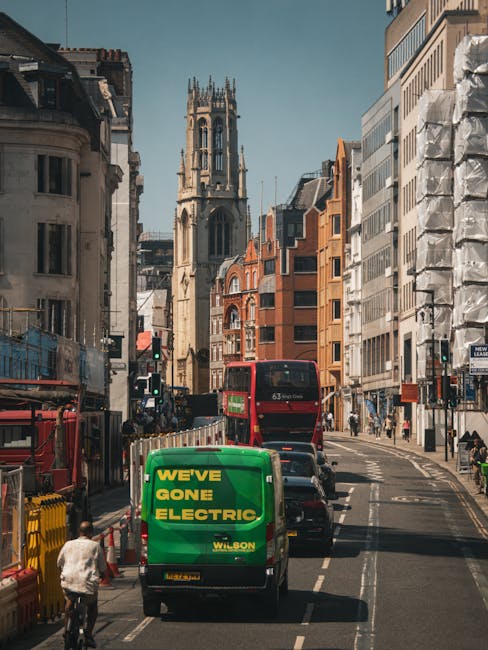
WC2 removals: best routes for Temple and Strand
Posted on 06/05/2026
WC2 Removals: Best Routes for Temple and Strand
Moving in WC2 can look straightforward on a map, then quickly become a bit of a headache once you factor in one-way streets, bus traffic, narrow access points, and the general tempo of central London. If you are planning WC2 removals: best routes for Temple and Strand, the real challenge is not just getting from A to B. It is choosing the right approach for the building, the time of day, the size of van, and the kind of items you are moving.
Temple and Strand sit in one of the busiest parts of the city, with law offices, flats, serviced buildings, student accommodation, and commercial premises all sharing tight roads. That means a sensible route plan can save time, reduce stress, and lower the risk of awkward delays outside a loading bay or a not-quite-wide-enough entrance. In this guide, we will break down the best routes, practical access tips, and the small decisions that make a big difference on moving day. Truth be told, central London rewards the prepared.

Why WC2 Removals: Best Routes for Temple and Strand Matters
WC2 is one of those London postcodes where route planning is not a nice-to-have. It is part of the job. Temple and Strand sit close together, but they behave very differently in practice depending on traffic patterns, building access, and the exact type of removal you are doing.
If you are moving a flat, office, or student room, the route you choose can affect how long your van idles, whether you can stop legally, and whether your team can carry items straight in without doubling back. And yes, that matters. A lot. Especially if you are working to a lift booking, a building manager's time slot, or a same-day deadline.
In this part of central London, routes can be disrupted by bus movements, theatre traffic, deliveries, roadworks, and occasional congestion around major junctions. You may only be a few streets from your destination, but the wrong turn can add ten minutes and a fair bit of frustration. On the other hand, a route that matches your access point, vehicle size, and timing window can make the whole move feel almost calm. Almost.
For many customers, the smartest approach is to think beyond the shortest line on a map. You want the best operational route, not simply the shortest one. That means considering:
- where the van can legally stop
- whether the street has restricted access or loading constraints
- how close the entrance is to the vehicle
- if any road is likely to be slower at certain times of day
- how easily fragile or bulky items can be moved once parked
If you are still in the planning stage, it helps to think of the move as a chain. Route, parking, loading, protection, and timing all depend on one another. Break one link and the rest gets messy.
How WC2 Removals: Best Routes for Temple and Strand Works
Route planning for Temple and Strand starts with access, not distance. The same postcode can involve very different movement patterns depending on whether your collection point is closer to the riverside, a courtyard entrance, a side street, or a commercial building with strict delivery instructions.
A good moving team will usually check three things before selecting the route:
- Vehicle fit - Will the van be small enough for the roads and turning points, but large enough to avoid multiple trips?
- Stopping point - Where can the vehicle safely pause for loading or unloading?
- Walking distance - How far will items need to be carried from van to door, or door to van?
That last point is easy to overlook. A route that looks fine on paper can become inefficient if the loading point is several hundred metres away. With heavy furniture, awkward boxes, or office equipment, that extra distance becomes very real very quickly.
In Temple, access can be influenced by smaller streets and tightly controlled building entry points. Around Strand, you may face more general traffic flow and a higher chance of congestion, especially near busier junctions and commercial activity. The best route is often the one that keeps your vehicle closest to the property without causing unnecessary delays or violations.
For local moves, it is often useful to speak with a specialist team that understands London access patterns rather than just postcode coverage. Pages like removals in Temple, man with a van in Temple, and removal services in Temple are helpful starting points if you want a service shaped around the area, not just a generic van booking.
A practical route plan also considers timing. For example, an early-morning collection may avoid some of the pressure of daytime traffic, while an afternoon slot may be easier for building access if the concierge or reception team is available. There is no one magic answer, and that is fine. Local removals are rarely about perfection; they are about good judgement.
Key Benefits and Practical Advantages
Choosing the right route through WC2 offers more than convenience. It changes the whole feel of the move.
- Less waiting time: Better route choice reduces the risk of getting stuck behind slower traffic or circling for access.
- Safer handling: Shorter carrying distances and easier kerbside access help protect furniture and reduce strain.
- Lower stress: Fewer last-minute changes mean fewer chances for confusion on the day.
- Better building relations: Arriving within the agreed slot keeps landlords, reception teams, and neighbours happier.
- More efficient pricing: Time saved on route planning can reduce labour time and avoid unnecessary extra trips.
For office moves, route efficiency also matters because disruption has a cost. A slow arrival can delay setup, meetings, or IT installation. For home moves, the benefit is simpler: less chaos, fewer boxes on the pavement, and a better chance of ending the day with your back intact. Which, to be fair, is always a win.
If your move includes bulky pieces, it is worth reading about furniture removals in Temple and bed and mattress transport tips. Those items are often the ones that expose a poor route plan fastest. A sofa is not forgiving when a street is too tight or a doorway is awkward.
For people trying to keep the move as light and simple as possible, route planning also works best alongside decluttering. Fewer items means fewer loading cycles and less time on the road. That is why it can help to follow practical decluttering advice before the move rather than packing everything and hoping for the best.
Who This Is For and When It Makes Sense
This topic matters to a wider group than you might think. It is not only for full house moves. In WC2, route planning is useful for all sorts of situations where access is tight and timing matters.
- Tenants moving into or out of flats: Especially where lifts, stairs, or short parking windows are involved.
- Office managers: If equipment, monitors, files, and desks need to move without disrupting the workday.
- Students: Small loads still get caught up in central London traffic, and smaller moves can be oddly stressful too.
- Landlords and letting agents: When coordinating quick turnarounds between occupiers.
- Anyone with fragile or high-value items: Such as pianos, specialist furniture, or delicate electronics.
It also makes sense if you are arranging a same-day or short-notice job. In those cases, the route has to be chosen quickly but carefully. Pages like same-day removals in Temple and student removals in Temple can be useful if your timeline is tight and you need something straightforward.
Maybe you are moving out of a compact flat near Strand with a couple of bags, a chair, and a surprisingly heavy book collection. Or maybe you are handling a full office clearance with more cables than anyone thought possible. Different scale, same principle: route choice should fit the move, not the other way round.
Step-by-Step Guidance
Here is a practical way to plan WC2 removals around Temple and Strand without overcomplicating it.
- Identify the exact collection and delivery points. Do not rely on a broad postcode. Make a note of the building entrance, loading area, and any side access.
- Check building rules. Some properties require lift bookings, security sign-in, or specific moving hours. Ask early.
- List the items being moved. Bulky furniture, fragile items, and anything awkward to carry should influence the vehicle choice and route.
- Choose a vehicle that suits WC2 streets. A smaller removal van is often more practical in central London than an oversized vehicle that struggles with manoeuvring.
- Plan for parking or stopping. Your team needs a realistic place to load and unload. The route should support that, not fight against it.
- Build in a timing buffer. Even a short delay can happen in the West End or around busy central roads. Leave breathing room.
- Protect items properly. Use blankets, wraps, tape, and labelled boxes so that the actual loading process is quick.
- Confirm the final route on the day. Roadworks and local changes can appear with no drama at all, which is exactly the problem.
If you want packing support before moving day, packing and boxes in Temple is a sensible service to consider. And if you are still deciding what kind of move you need, the broader services overview gives a cleaner picture of the options available.
A small but useful habit: label the sides of boxes, not just the top. When items are stacked in a van or a hallway, side labels save time. It sounds tiny. It isn't.
Expert Tips for Better Results
The best route for a WC2 move is rarely the most obvious one. A few local habits make a big difference.
- Use a smaller, more manoeuvrable vehicle where access is tight. Oversized vans can create more trouble than they solve in central streets.
- Avoid assuming daytime is always best. Sometimes early slots work better for access, while other times a later slot avoids peak movement around offices and stations.
- Keep the carry path short. If a side entrance cuts two minutes off each trip, that adds up quickly.
- Protect furniture before moving it out. This is where things like wrapping and disassembly make the route easier to use.
- Have a plan for valuables and delicate items. Pianos, artwork, and sensitive electronics need more than a standard lift-and-load approach.
If you are moving something especially awkward, such as an upright piano, it is worth reading the guide on professional piano moving before you decide whether to attempt it yourself. Honestly, that is one job where confidence can disappear very quickly halfway down a staircase.
Another useful habit is to keep a small essentials bag separate from the main load: keys, charger, documents, water, medication, and any building passes. You will thank yourself at the end of the day, when the last box is somewhere in the van and you really do not want to open six others looking for a phone cable.
For bigger moves, a calm, measured style works better than frantic energy. There is a reason experienced crews seem a bit unhurried. They are not slow. They are avoiding mistakes.

Common Mistakes to Avoid
In WC2, a few errors show up again and again. Most are avoidable.
- Choosing the shortest route instead of the best access route. A shorter map line can still be a poor moving route.
- Ignoring loading restrictions. If you cannot stop safely, the move will slow down even if the road is close.
- Underestimating walking distance. Carrying from a distant bay or side street eats time and energy.
- Leaving packing too late. Rushed boxes are more likely to split, tilt, or get mislabelled.
- Forgetting to check the building booking. This one causes more headaches than people like to admit.
- Using the wrong van size. Too large can be awkward; too small can mean multiple journeys. Neither is ideal.
Another common issue is failing to consider what happens after the move. If you are between properties, storage may be needed for a few days or weeks. A quick look at storage options in Temple can help if your move-out and move-in dates do not line up neatly. They rarely do, actually. Timing has a habit of being a bit annoying like that.
People also sometimes forget that the first route attempt is not always the final one. If road closures or building access changes on the day, a flexible team should be ready to adjust. That flexibility is part of what makes professional removals worth considering.
Tools, Resources and Recommendations
You do not need a huge toolkit for a local move, but you do need the right basics. A little preparation reduces friction more than most people expect.
- Strong boxes: Use reliable boxes that can handle stacking and protect corners.
- Bubble wrap or paper: Good for glassware, frames, electronics, and delicate household items.
- Furniture blankets: Ideal for protecting cabinets, tables, and polished surfaces.
- Stretch wrap: Useful for keeping drawers, doors, and soft furnishings secure.
- Trolley or sack truck: Particularly helpful for heavier items and office equipment.
- Labels and marker pens: Simple, but vital for finding your way through the unpacking stage.
For moving-day planning and packing help, the guide on stress-free packing tips is worth a read. If you are moving items into temporary storage, sofa storage advice and freezer care during inactive periods are both practical references.
For service clarity, useful pages include removal van hire in Temple, man and van services in Temple, and house removals in Temple. If you are moving a flat or office specifically, those dedicated pages often help you compare the right level of support without guesswork.
One more practical recommendation: if you are moving large items on your own, take a moment to review safe solo lifting methods and body mechanics for safer lifting. Nobody wants to learn about posture the hard way.
Law, Compliance, Standards, or Best Practice
For removals in central London, the biggest compliance concerns usually relate to parking, access, safety, and building rules rather than anything overly complicated. Still, these details matter.
As a practical rule, always check for any local parking restrictions, loading allowances, or property-specific moving instructions before the van arrives. In busy WC2 streets, stopping in the wrong place can create delays and problems for everyone involved. It is also wise to follow the building's own procedures for lift use, corridor protection, and booking windows. Some properties are stricter than others, and that is normal.
From a safety perspective, professional removals should use sensible handling methods, appropriate equipment, and secure loading practices. For customers, a useful sign of good practice is whether the team takes time to ask about stairs, access width, fragile items, and any shared areas that need protection. That is the kind of detail that separates a smooth move from a chaotic one.
For transparency on service standards and customer information, it can help to review pages like the health and safety policy, insurance and safety information, and terms and conditions. If you are comparing providers, those pages are often more revealing than a slick homepage. A bit dull, perhaps, but useful.
Also worth noting: if you are disposing of unwanted items during the move, use sensible recycling and waste handling practices. The recycling and sustainability page is helpful if you want a move that is a bit more responsible and a bit less wasteful.
Options, Methods, or Comparison Table
Different WC2 moves call for different approaches. Below is a simple comparison to help you choose the right one.
| Approach | Best For | Strengths | Trade-Offs |
|---|---|---|---|
| Man and van | Small flats, student moves, lighter loads | Flexible, cost-conscious, easier in tight streets | May need multiple trips for larger moves |
| Dedicated removal van | Medium household moves, furniture-heavy jobs | Better load capacity, more organised transport | Can be harder to position in very restricted streets |
| Full removal service | House moves, office moves, complex access | More support, packing help, better handling of complexity | Usually more involved to arrange |
| Same-day service | Urgent moves, short notice changes | Fast response, practical under pressure | Less room for scheduling flexibility |
If you are unsure which method fits your move, it often helps to start with the size and fragility of the load, then think about access second. For example, a small but fragile move may still benefit from a fuller service if the route is awkward or the building access is strict.
Case Study or Real-World Example
Here is a realistic example from a typical WC2-style move.
A tenant moving from a compact flat near Strand had a small number of boxes, a desk, a chair, a mattress, and a couple of awkward kitchen items. At first glance, it looked like a quick job. But the property had a narrow entrance, a shared lift, and a loading point that could not be used for long. The first instinct was to send a larger van. That would have made everything harder.
Instead, the move was planned with a smaller vehicle, an earlier arrival slot, and pre-labelled boxes so loading could happen quickly. The route was chosen to keep the van close to the property without forcing long carries. The result was not dramatic, just efficient. Less waiting, fewer trips back to the entrance, and no scrambling for extra packaging at the last minute.
The customer had also taken the time to declutter beforehand, which mattered more than they expected. A few items were donated, a few were recycled, and the overall load became more manageable. That simplicity often does the heavy lifting. Not glamorous, but true.
If the job had included specialist items, such as a piano or large antique furniture, the planning would have needed even more care. For those cases, the local service pages and specialist guides are useful because they help you judge whether DIY is sensible or whether experienced handling is the safer route.
Practical Checklist
Use this checklist before your Temple or Strand move.
- Confirm the full collection and delivery addresses
- Check the exact building entrance and any lift booking requirements
- Review parking, loading, and stopping options in advance
- Choose a vehicle that suits the street and the load
- Label all boxes clearly, including fragile items
- Wrap furniture and protect corners before moving day
- Separate essentials you need on arrival
- Keep key documents, keys, and passes with you
- Build in time for traffic or access delays
- Have a backup plan if the route or stop point changes
Expert summary: For WC2 removals, the best route is usually the one that gives you the cleanest loading access, the shortest practical carry distance, and the least chance of interruption. In central London, that combination is usually worth more than simply chasing the fastest map time.
Conclusion
WC2 removals around Temple and Strand are all about smart planning. The best route is not always the quickest line on a sat nav, and it is definitely not always the busiest road with the fewest turns. It is the route that fits your building, your van, your timing, and the reality of central London access.
If you prepare properly, choose the right moving support, and keep an eye on the practical details that others overlook, the day becomes much easier. A move in this part of London can be efficient, calm, and surprisingly smooth. Not every time, of course. But often enough to make the effort worthwhile.
For the best results, pair route planning with the right removal service, good packing, and clear communication. That is the formula. Simple, really. The hard part is remembering to do it before the van arrives.
Get a free quote today and see how much you can save.
And if you are still at the planning stage, take a breath. A well-managed move in Temple or Strand is absolutely doable, and once the last box is inside, the relief is genuine.